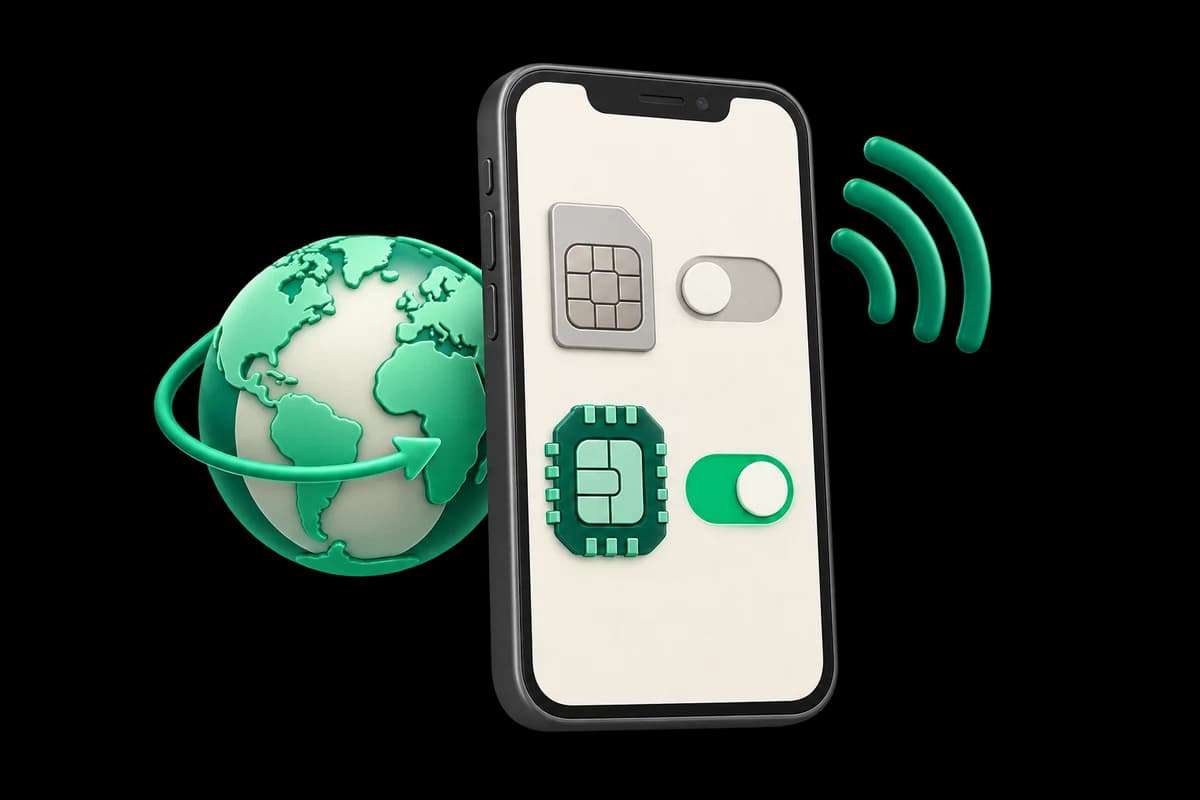
Yes: the Mexico packages MX_1_7 and MX_5_30 permit hotspot in the checked product information. You can use the phone's sharing function to provide its connection to another compatible device, but both consume the same purchased allowance. Sharing 5 GB does not create another 5 GB for a computer or guarantee reception and speed everywhere. Before connecting someone else, inspect pending downloads, remaining data and package validity.
Hotspot shares a connection, not a second contract
The phone containing the eSIM works as an access point, while the other device uses its internet connection. The catalog's hotspotSupported field is true for both examples in this guide. That supports describing the feature without inventing a different allowance for every device. Data and days still belong to the package installed on the phone.
Separate three situations. Sharing with someone for a quick information check is a usage choice. Leaving a computer connected with automatic updates can add tasks you did not intend. Using the phone for work also requires checking the task's needs. Hotspot permission is not a performance promise for any video call, platform or delivery.
We do not assign megabyte figures to activities because your applications, files and settings have not been measured. Instead, inspect the phone's data counter and consumption tools offered by your devices. Different systems may update their figures at different moments; also retain order information and check package state when available.
Travel context comes from a pinned Wikivoyage revision; catalog examples were checked on 8 October 2026. The dataset helps explain Mexican routes but does not publish your order's current conditions. Hotspot, networks, allowance and activation facts here come from the specific products described.
Choose between sharing and separate connections
If two travelers remain together, sharing may support their intended functions while the main phone has connectivity. The second device depends on that phone being present, switched on and configured to share. Do not assume someone visiting another place separately will retain access to that hotspot.
If the group separates, each person should prepare their own orientation and communication arrangements. Save addresses and meeting points before leaving. A shared eSIM is not a network that follows every traveler independently. Whether to use hotspot or individual purchases depends on how the group moves as well as intended data use.
For a computer, inspect unattended tasks: folder synchronization, photo backups, program updates and waiting downloads. Review settings before connecting using the functions available on that system. We do not promise that every device has an identical control or that one setting stops every transfer.
Also distinguish sharing data from sharing a telephone identity. Example packages include neither traditional calls nor SMS. A computer connected to hotspot does not receive a Mexican number or the ability to receive verification messages sent to another line. Check that requirement separately before depending on connectivity for a booking or account login.
When sharing with another traveler, agree which phone contains the purchased profile and keep its order details privately. Do not send the QR to the second person as a way to share internet. Hotspot connects devices to the phone; it does not mean installing the same eSIM profile on several phones. This distinction helps prevent an unnecessary installation attempt when the actual need is a local connection between devices.
Mexico has more than one reception setting
The corpus's geography includes plateaus, mountains, coastal plains, northwestern deserts and southern and southeastern tropical forests. This variety explains why data preparation should not be based only on an urban stay. City visits, mountain excursions and coastal transfers can need different resources even when the contract identifies one country.
Wikivoyage mentions Copper Canyon, the Sea of Cortez, the Caribbean coast and the volcanic belt as travel settings. These names help locate different parts of an itinerary, but they are not mobile coverage evidence. A Mexico eSIM does not promise reception throughout those environments or all activities there.
For shared data, the consequence is direct: if the main phone cannot establish usable mobile internet, the second device does not gain internet merely by joining the hotspot. A larger allowance does not alone resolve a missing network. Check the actual route and local options when a connection matters for an important task.
Save accommodation addresses, transfer documents and orientation resources that your tool permits downloading. Separate what can be read offline from what needs updated information. A saved map does not automatically include live traffic or service changes. This preparation helps whether travelers share one connection or carry separate eSIMs.
The source describes mountainous terrain alongside coastal and forest landscapes and identifies smaller towns as another part of Mexican travel. A trip away from a city needs a precise arrival reference, not merely the name of the broader region. Save the organizer's directions and ask about communication arrangements for a particular activity. These are editorial preparation suggestions, not evidence that a package works at every entrance or stop.
Intercity buses: prepare documents for each stage
The source presents buses, cars and air travel as important means of moving around Mexico. For longer journeys it describes services linking cities and tourist destinations. Check the actual ticket and current operator information for your stage; we do not copy dataset schedules or prices as current conditions.
Before departure, save the full terminal name and arrival reference. A city may have several transport points, so the city name alone may not locate your booking. Keep the ticket beside the next accommodation's address. That lets you understand the stage even when email or a transport application will not load during part of the journey.
If sharing internet with another traveler, review the tasks each needs. Reading a booking together avoids opening every document separately on both devices, but that is an organization suggestion, not a measured savings claim. We do not promise wifi on every bus or continuous eSIM connectivity along the route.
For work, distinguish reading a document from making a delivery requiring a stable session. Preparing a file before departure can reduce dependence on a fresh download, but it does not turn the journey into a place with guaranteed performance. Check the task's requirements instead of equating hotspot permission with uninterrupted service.
Retain the original booking when saving a screenshot so a changed departure or arrival can be compared later. A data connection may retrieve an update, but the package does not determine which travel document remains valid. Confirm that question with the transport provider. Keeping documents organized is useful even when the phone has a working connection because it reduces confusion between stages.
Urban transport and local orientation
The corpus describes urban services involving different operators and modes. In Mexico City it mentions articulated, electric and conventional buses within urban transport; for Monterrey it describes links with Metrorrey. These references show why you should keep the route for the city where you are rather than a generic national instruction.
Combis, colectivos and peseros form another source context. Their names and ways of identifying routes can vary between cities. If your transfer involves one, save the destination and ask for the correct boarding and arrival points. Data can facilitate a search but does not replace confirming the direction with the actual service.
Language preparation helps as well. The source describes Spanish as the main language of public communication while recognizing linguistic diversity. A Spanish-speaking visitor still needs an accurate address: understanding the language does not resolve an incomplete reference or two accommodations with similar names. Keep the neighborhood, address and specified meeting point.
We do not attribute current features to a particular application from the corpus. Check installed tools, what information they can save and which registration they require before travel. If a service needs a local number, these data examples do not satisfy that requirement by themselves. Resolve it with the service rather than increasing the hotspot allowance.
An urban route can contain transfers between services, so keep the point where each leg changes. This is especially useful when one person follows a map on the main phone while another device receives shared data. Both should understand the destination and return point, rather than treating access to the hotspot as the entire plan. No application function or live route availability is guaranteed by this recommendation.
Trains and regions: confirm services before departure
Wikivoyage includes railway references for the Yucatán Peninsula and the interoceanic corridor, as well as the Chihuahua–Pacific journey through Copper Canyon. We use these names as destination context without promising current departures, operating stations or timetables. Check the reservation and transport provider's conditions before planning a connection.
For a railway stage, organize the ticket, station, arrival and accommodation transfer. A Mexico package does not include onboard train internet or mean terrestrial networks provide reception at every point. Save documents before boarding and retain information needed for support.
If traveling onward to another country, return to the package's country list. Telcel or AT&T in Mexico product information does not automatically add the United States, Canada or another destination. Operator, routing and coverage territory are different fields. A brand operating in several countries does not establish a regional contract.
Two actual products for comparing volume and days
MX_1_7, Mexico 1GB 7Days, provides 1 GB and 7 days of validity. Its activeType 2 starts the period with the first eligible destination-network connection. The stated installation window is 180 days. It lists Telcel and AT&T labeled 5G and permits hotspot use.
MX_5_30, Mexico 5GB 30Days, provides 5 GB and 30 days. It also records activeType 2, a 180-day installation window, Telcel and AT&T labeled 5G and permitted hotspot. Volume is total, not daily. If a phone and computer use data, both consume that same allowance during validity.
Neither example includes traditional calls or SMS. The general technology field says 3G/4G/5G and does not guarantee bandwidth. IP routing is labeled SG, provider information that does not establish a local Mexican address for every session. It also does not turn the product into Singapore coverage.
The fair use field is empty in the snapshot, so we do not claim unlimited products or guaranteed freedom from restrictions. We also do not promise an eSIMStore top-up button based on provider metadata. Check current catalog options if another purchase is needed and confirm its conditions before relying on it.
The selection contains MX_0.1_7, Mexico 100MB 7Days, with activeType 1, starting on installation. We therefore do not generalize first-connection activation to every Mexican product. Read the order before early installation: allowance and the start event are separate characteristics.
Installation, first test and hotspot checks
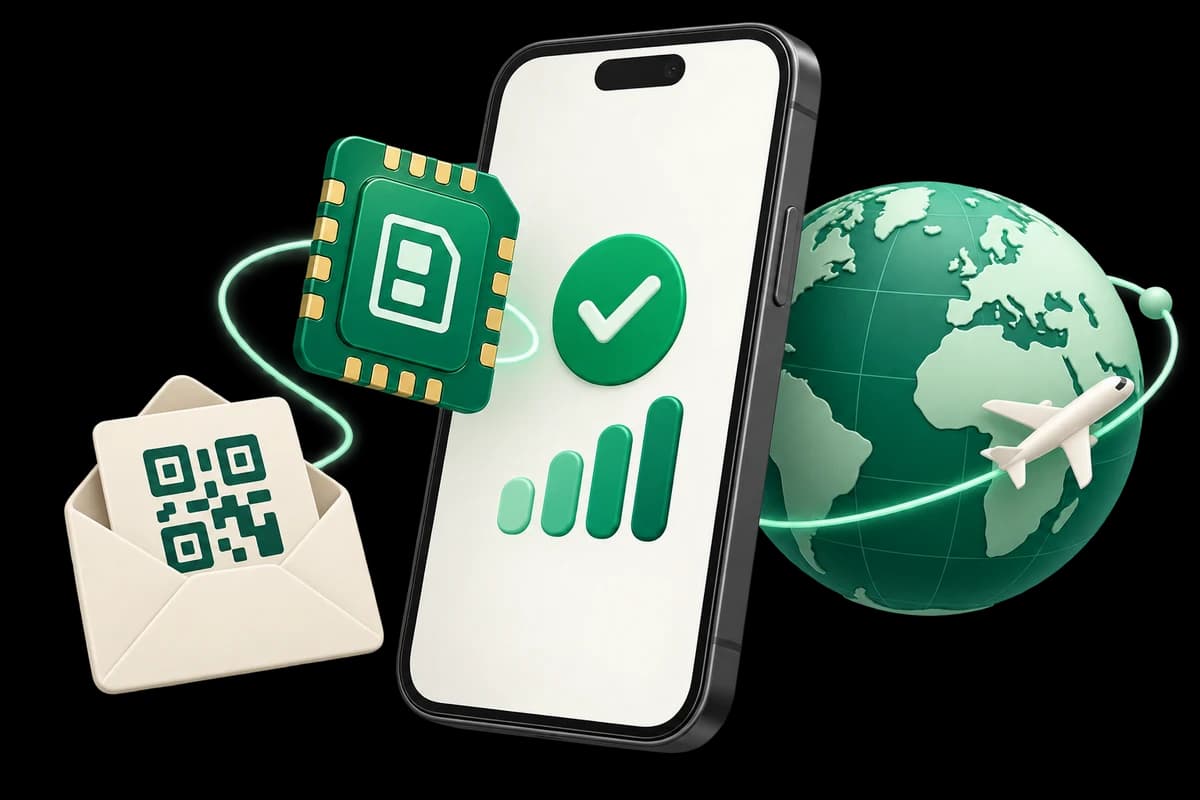
Install on a compatible, carrier-unlocked device. Dependable internet is needed to download the profile through the QR or manual details. Keep codes private and do not test the QR on several devices. The eSIM is installed on the main phone; sharing its connection does not mean installing the same profile on a computer.
At the destination, select the travel line for cellular data and enable its roaming as instructed. Disable home-line data roaming and automatic switching where offered. This assigns data service but does not promise freedom from charges for another line's calls or messages. Read the installation FAQ for general guidance.
First check that the phone browses on its own. Then enable sharing and connect the second device following system instructions. If the phone browses but the other device does not, inspect the local connection between them before changing the APN. If the phone also fails, check the line, roaming, allowance, validity and order-specific APN.
Do not delete the eSIM as the first diagnostic step. Reinstallation and transfer are not guaranteed here. Give support the product name, symptom and relevant settings without exposing private QR or codes. Distinguishing mobile internet from a hotspot connection problem helps explain what has failed.
Questions about sharing data in Mexico
Does the computer get an independent allowance?
No. It uses the phone package's allowance. The 1 GB or 5 GB in these examples does not multiply by connected devices. Review each device's tasks and discuss expected use before leaving a shared connection open throughout a stage.
Can hotspot provide internet without mobile reception?
The local connection to the phone does not create an operator internet session. If the phone lacks usable package data, the second device does not get internet from it. Inspect the specific problem and retain offline resources for orientation while resolving it.
Which guides help for a trip across countries?
The United States guide about your usual number separates data from telephone services. The Canada guide about validity starts shows why each package's clock matters. Before crossing, confirm the countries listed for the installed product.
Sources, credits and scope of adaptation
Context adapts contributions by the authors of Wikivoyage: Mexico, revision 5270498. See the contribution history. The corpus comes from vincentss/enwikivoyage-retrieval-202605, curated by vincentss and pinned to 509ec2fe1ed76f90d28fd0eebf7a70f108ae5b1b.
eSIMStore translated and reorganized material, omitted schedules, prices, rules and current application-feature promises, and added recommendations and catalog facts checked on 8 October 2026. Travel context is a documentary snapshot. This textual adaptation is under CC BY-SA 4.0, excluding graphics and brand elements.
Operational references include eSIM Access on hotspot, SMS and voice, activation and roaming. Compare device menus with Apple or Google Pixel according to model and version.